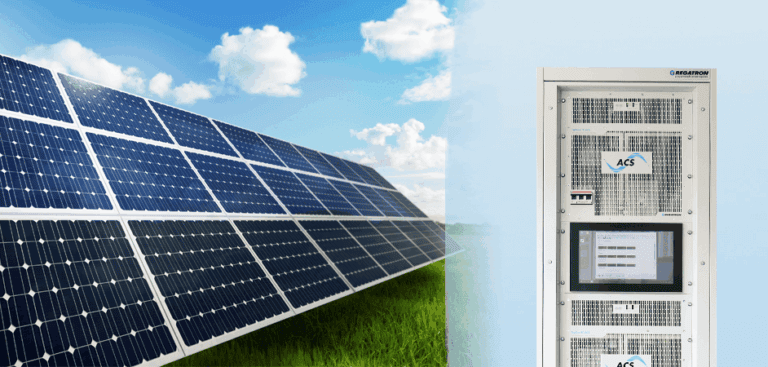

What are Universal Power Supplies? In the context of high-power electronics, these are programmable, bidirectional DC power sources capable of both sourcing and sinking energy with high precision. These systems are “universal” because they can simulate a wide variety of electrical loads, including batteries, solar arrays, and electric vehicle (EV) powertrains. By using Universal Power Supplies from Regatron, Australian engineers can conduct complex R&D and compliance testing using a single, modular platform. Consequently, these devices eliminate the need for multiple dedicated power sources, reducing laboratory footprint and improving operational efficiency.
Why Versatility Matters in Modern Power Testing
In the past, laboratories required separate units for different testing tasks. For instance, you might have needed one unit for solar simulation and another for battery testing. However, the rise of bidirectional energy systems has changed the requirements for modern test benches. Universal Power Supplies solve this problem by offering a wide, auto-ranging output. Therefore, a single unit can cover a broad spectrum of voltage and current combinations.
Furthermore, the Australian energy sector is moving toward integrated microgrids and vehicle-to-grid (V2G) technology. As a result, testing equipment must be as flexible as the systems they validate. Investing in a universal platform allows your business to adapt to new project requirements without purchasing additional hardware. This flexibility is a significant advantage for Tier 1 contractors and research institutions.
Understanding Bidirectional and Regenerative Technology
A core feature of professional Universal Power Supplies is their bidirectional capability. This means the unit can operate in all four quadrants of the voltage-current plane. It acts as a power source when providing energy to a load. In addition, it acts as an electronic load (sink) when absorbing energy from a device under test (DUT).
The “regenerative” aspect is equally important for Australian facilities. When the power supply sinks energy, it does not dissipate it as heat. Instead, the unit converts the energy back into high-quality AC power and returns it to the local facility mains. Because of this, you can achieve energy savings of up to 95%. In a high-cost energy market like Australia, this feature drastically reduces the total cost of ownership.
Where Universal Power Supplies are Used in Australia
The Australian market is currently seeing a surge in electrification across several key sectors. Consequently, Universal Power Supplies are being deployed in critical infrastructure and R&D projects nationwide.
1. Electric Vehicle (EV) Powertrain Testing
Testing the drivetrain of an electric bus or mining vehicle requires massive power. Regatron’s universal units can simulate the high-voltage battery pack while absorbing the “back-EMF” generated during braking. Therefore, engineers can test the entire motor-inverter system under real-world driving cycles.
2. Battery Simulation and Cycle Testing
Modern battery management systems (BMS) need to be validated against complex discharge curves. Universal Power Supplies can mimic the internal resistance and voltage fluctuations of various battery chemistries. This is vital for Australian companies developing grid-scale storage solutions or home battery systems.
3. Photovoltaic (PV) Array Simulation
To test a solar inverter, you need to simulate the non-linear output of a solar farm. The G5.Universal series can replicate these curves with high fidelity. In addition, it can simulate rapid changes in irradiance, ensuring the inverter’s MPPT (Maximum Power Point Tracking) algorithms are compliant with AS/NZS 4777.2.
Procedures for Setting Up a Universal Test Bench
Operating Universal Power Supplies at high power levels requires a systematic approach to ensure both safety and accuracy. While the software provides a user-friendly interface, the physical installation must follow strict guidelines.
-
Define the Operating Mode: Select whether the unit will operate as a standard voltage source, a battery simulator, or a PV simulator within the control software.
-
Configure Parallel or Series Links: If your project requires higher power, connect multiple modules using the master-slave interface. Ensure all communication cables are securely locked.
-
Set Protection Limits: Program the over-voltage (OVP) and over-current (OCP) protection levels. These act as critical safety “guardrails” for your device under test.
-
Connect Remote Sensing: Always use remote sense leads for high-current applications. This ensures the unit compensates for any voltage drop across the main power cables.
-
Execute the Test Sequence: Start the automated test script. Monitor the regenerative power flow to ensure energy is being returned to the grid correctly.
Disclaimer for Procedures: The procedures described above are provided as general examples only. High-power electrical testing involves significant risks. Always follow your site-specific safety protocols, the official Regatron operating manual, and Australian Electrical Standards (AS/NZS 3000).
Common Mistakes in High-Power Setup
Even with advanced Universal Power Supplies, errors in setup can lead to poor data or hardware stress. One frequent mistake is underestimating the “Grid Quality.” Because regenerative supplies push power back into the mains, the local electrical switchboard must be capable of handling the return flow. Always consult with a facility electrician before running high-power sinking tests.
Another common pitfall is improper cabling for high-frequency transients. If you are simulating fast ripples or harmonics, the inductance of your cables can distort the waveform. Therefore, you should use low-inductance, high-quality copper busbars or cables. In addition, keep the distance between the power supply and the DUT as short as possible.
Finally, many operators ignore the software updates. Regatron frequently releases firmware updates that improve the “Universal” simulation algorithms. Running outdated software can lead to inaccuracies when simulating the latest battery chemistries or solar panel technologies.
The Regatron G5.Universal Advantage
TMG Test Equipment provides the Regatron G5 series to the Australian market because it represents the pinnacle of “Universal” design. These systems are modular, meaning you can start with a single 18kW or 54kW unit and scale up to 2MW or more.
-
Wide Range Capability: A single unit can often cover multiple voltage classes (e.g., 0-1000V or 0-1500V).
-
High Dynamics: Achieve extremely fast setpoint changes, essential for simulating rapid grid faults or motor transients.
-
Integrated Software: The G5.Control software suite includes dedicated modules for battery and PV simulation, making complex setups easy.
-
Local Australian Support: TMG provides local technical support and NATA-traceable calibration to ensure your equipment stays compliant.
By choosing a universal platform, you are essentially “future-proofing” your laboratory. As Australian industry standards evolve, your equipment can be reprogrammed to meet new requirements.
Authority Signals and Australian Relevance
In Australia, testing high-power equipment requires adherence to strict EMC and safety frameworks. For example, the CSIRO and major Australian universities rely on Regatron’s precision for energy research. Furthermore, all grid-connected testing must comply with Standards Australia guidelines, specifically the AS/NZS 61000 series for electromagnetic compatibility.
Using NATA-calibrated Universal Power Supplies is often a requirement for government and defence tenders. TMG’s internal quality systems ensure that every system we deliver meets these rigorous local benchmarks, providing you with data that is globally recognised.
Summary and Conclusion
Universal Power Supplies are the ultimate tool for the modern Australian engineer. Their ability to act as both a source and a regenerative sink makes them uniquely suited for the “green energy” transition. By consolidating multiple testing functions into a single, modular platform, you reduce complexity and save on operational costs. Whether you are validating a new EV charger or researching microgrid stability, Regatron’s universal solutions provide the precision and power you need.
If you would like to see how a universal power solution can streamline your laboratory, the team at TMG Test Equipment is ready to assist. Contact us today for a technical consultation or a demonstration of the Regatron G5 series.