This Locator Selection Guide offers an introduction to the type of locators available based on the type of Underground Cable, Metal, Plastic or Reinforced steel Concrete Pipes, Markers or Steel material you commonly need to locate.
Using the Correct Locating Tool from Radiodetection helps you significantly decrease the risk of damage and personal injury.
Quick Selection Table
| Need to find? | MAG (Magnetic Locator) | EML (Electromagnetic Locator) | GPR (Ground Penetrating Radar) |
| Locate Pipes & Cables | |||
| Iron or Steel Pipes | Yes | Yes | Yes |
| Copper Pipes | Yes | Yes | |
| Electrical Wires | Yes | Yes | |
| Live Electrical Cables | Yes* | Yes | |
| Telecommunication Wires | Yes | Yes | |
| Irrigation Wiring | Yes | Yes | |
| Marker Balls | Yes | ||
| Locate Pipe/Conduit Blockage | Yes** | ||
| Locate Ferrous Metals (Iron or Steel) | |||
| Any iron, steel or ferrous metal objects | Yes | ||
| Water or Gas Curb Box/Valve Box | Yes | ||
| Steel lids or manhole covers | Yes | ||
| Steel Pipe joints and steel pipes | Yes | ||
| Survey Pins, Markers & Nails | Yes | ||
| Reinforced septic tanks (rebar) | Yes | ||
| Steel culverts | Yes | ||
| Steel trap to septic tanks | Yes | ||
| Boundary markers | Yes | ||
| Steel drums | Yes | ||
| Unexploded Ordnance | Yes |
*Most Locators have a Depth on Power Measurement Option available.
**A Trace Rodder to use with the Locator’s Transmitter is required.
Locator Types
Magnetic Locators
Magnetic Locating Senses and reacts to Ferrous Metals (iron or steel) ONLY. Radiodetection Magnetic Locator range will locate ferrous metals as small as nails and survey pins in the ground at depth up to 5.48m (soil and object dependant).
Electromagnetic Locators (Pipe & Cable Locators)
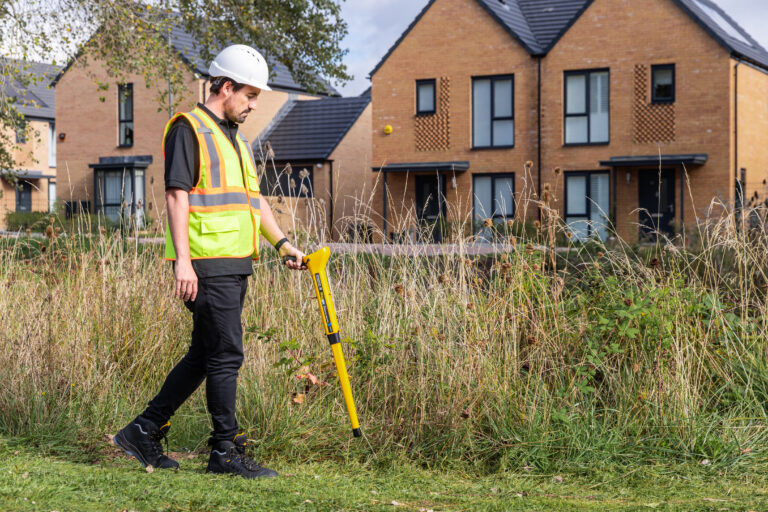
This method is used for locating any metal pipe or cable. It is the most common method of locating and has become almost universal. Its main shortcoming however is that it will not locate non-metallic lines such as plastic pipes (unless the utilities have installed a tracer wire).
The system requires three basic building blocks:
-
A signal generator or transmitter to apply a signal to a buried line.
-
A small self-contained transmitter (Sonde) for inserting in drains or pipes.
-
A handheld receiver to locate the signals.
Ground Penetrating Radar (GPR Locators)
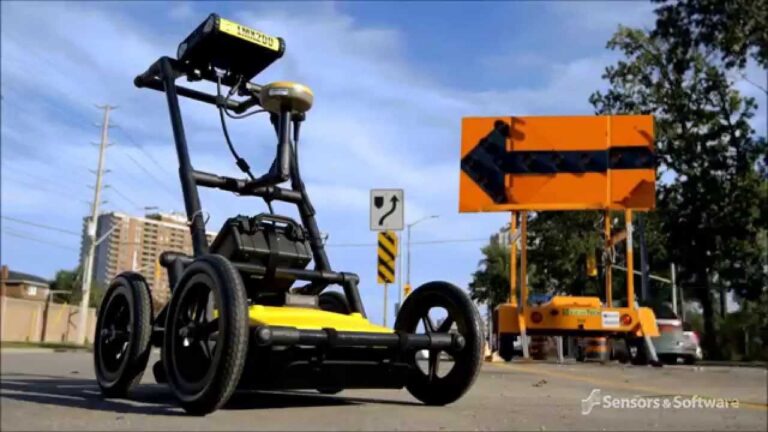
Ground Penetrating Radar is the essential tool for locating non-metallic assets that other methods miss. Unlike EML, GPR can “see” plastic (PVC), concrete, and asbestos pipes by sending radio pulses into the ground and measuring the reflections.
The Sensors & Software LMX® range provides a visual map of the subsurface, allowing operators to:
-
Locate utilities without a tracer wire or physical connection.
-
Identify underground storage tanks and structural variations.
-
Generate on-site reports and 3D depth slices for immediate verification.
Advanced Features & Options
Depth on Power Detection
All Radiodetection Electromagnetic Pipe & Cable locators will locate buried Power Cables. To establish an estimated Power Cable Buried Depth, some locators can perform this function with the Receiver only (Power or Radio mode).
Signal Clamps
-
Transmitter Clamps: Safely applies a signal to any metal cable or pipe without interrupting the supply. Available in 50mm, 100mm & 215mm diameters.
-
Receiver Clamps: Used to help identify target utilities in congested areas by sensing signals from individual utilities.
Sondes
Sondes are self-contained, battery-powered transmitters that attach to the end of a Rodder. They are used to locate buried plastic Water Pipes and other non-magnetic utilities. The position of the sonde can be detected from above ground, allowing you to trace the paths of underground pipes or find blockages.
Cable Break Detection (A-Frame)
“A-frames” are used for locating sheath faults on cables and coating defects on pipelines. It provides direction and magnitude of fault information on the display of the locator.
Trace Rodders
A Trace Rodder is a flexible fibreglass composite rod containing conducting wires. When energized with a Transmitter, you can trace the path of the pipe or locate blockages within.
The Gold Standard in Utility Locating: Radiodetection and Their Product Range
When it comes to damage prevention and utility surveying, Radiodetection is widely considered the industry benchmark. Since the company’s inception in 1970, they have pioneered many of the technologies that are now standard in the locating industry. Their equipment is designed not only for accuracy but for durability in the harsh field conditions faced by civil contractors, telecommunications technicians, and utility owners.
The Radiodetection range is tiered to meet different levels of complexity, from simple “avoidance” tasks to professional-grade high-precision utility mapping.
The Precision Range: RD8200® and RD7200®
The RD8200 and RD7200 series represent the pinnacle of electromagnetic locating. These units are designed for operators who need to differentiate between multiple utilities in congested underground environments.
-
RD7200: This is the “no-compromise” solution for everyday professional locating. It features seven active and three passive frequencies, making it versatile enough for most power, water, and telecom applications. It includes built-in filters to help identify a target line in environments with high levels of electrical interference.
-
RD8200: Built for the most demanding environments, the RD8200 offers more advanced features, such as SideStep Auto™, which allows the locator to suggest a frequency that is less prone to interference on a specific site. It also features a larger frequency range and superior logging capabilities for quality control and auditing.
Avoidance Tools: The C.A.T4™ and Genny4™
For general excavation where the goal is simply to avoid hitting a pipe or cable (rather than mapping it), Radiodetection offers the C.A.T (Cable Avoidance Tool) range. This is the world’s most popular avoidance tool, often found on the back of every service truck in Australia.
The C.A.T4 and Genny4 work in tandem to detect signals naturally radiating from cables or signals intentionally applied by the operator. They are designed for “one-button” simplicity, ensuring that even workers with minimal training can perform a safety sweep before they break ground.
Specialized Solutions: Lexxi T1660 and Fault Finders
Radiodetection also provides specialized tools for cable maintenance and repair:
-
Lexxi T1660: A handheld Time Domain Reflectometer (TDR) used to find the exact location of cable faults, such as opens, shorts, and moisture ingress.
-
Fault Finding (A-Frame): When used with the precision locators, the A-Frame accessory can pinpoint a “leak to earth” on a cable sheath to within a few centimeters, saving hours of investigative digging.
Why Choose Radiodetection?
The primary advantage of the Radiodetection ecosystem is its integration. The same TX-10 transmitter can be used across different receiver models, and the standardized menu systems mean that as a technician graduates from a C.A.T4 to an RD8200, the learning curve is significantly reduced.
Furthermore, their focus on Centros™ technology—an integration of algorithms and hardware—ensures that the depth measurements and directional arrows on the screen are stable and repeatable. In an industry where a 10cm error can lead to a multi-million dollar utility strike, this reliability is why Radiodetection remains the preferred choice for NBN contractors and major utility providers across Australia.
By pairing a Radiodetection locator with TMG’s technical support and calibration services, operators ensure they have the most reliable defense against utility damage available on the market today.
Contact TMG Test Equipment for more information on 1800 680 680.