

Why is continuous EMF monitoring becoming an essential requirement for modern network deployments? In short, wireless environments are highly dynamic; network usage, power levels, and infrastructure density fluctuate constantly throughout the day. Consequently, a single point-in-time measurement is no longer sufficient to guarantee long-term compliance or maintain public trust. By implementing continuous EMF monitoring, operators can provide transparent, real-time evidence that electromagnetic field exposure levels remain well within Australian safety limits. This proactive approach helps address community concerns while supporting the rollout of 5G and IoT infrastructure in connected environments.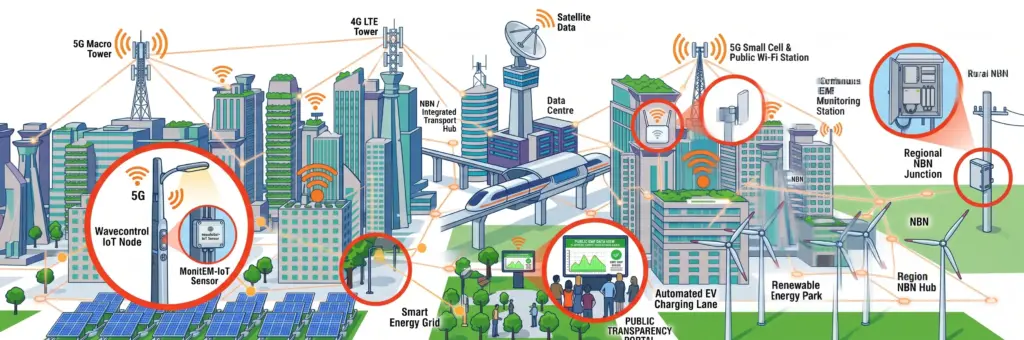
Why Real-Time EMF Oversight Matters
As telecommunications infrastructure continues to expand across Australia, public awareness regarding electromagnetic field (EMF) exposure is reaching an all-time high. It is now common for local communities to question the safety of living near newly installed 5G base stations or high-density antenna sites. While regulatory bodies like ARPANSA provide clear guidance that exposure levels are safe, scientific reassurance alone is often insufficient for a worried public.
Without visible and ongoing proof, community trust can quickly erode, leading to project delays and costly legal challenges. Therefore, the ability to demonstrate “live” safety data is a powerful tool for infrastructure providers. Continuous EMF monitoring transforms the safety conversation from a theoretical debate into an evidence-based dialogue. Furthermore, it ensures that operators stay ahead of any regulatory changes by maintaining a comprehensive historical record of site performance.
Defining Continuous EMF Monitoring and Standards
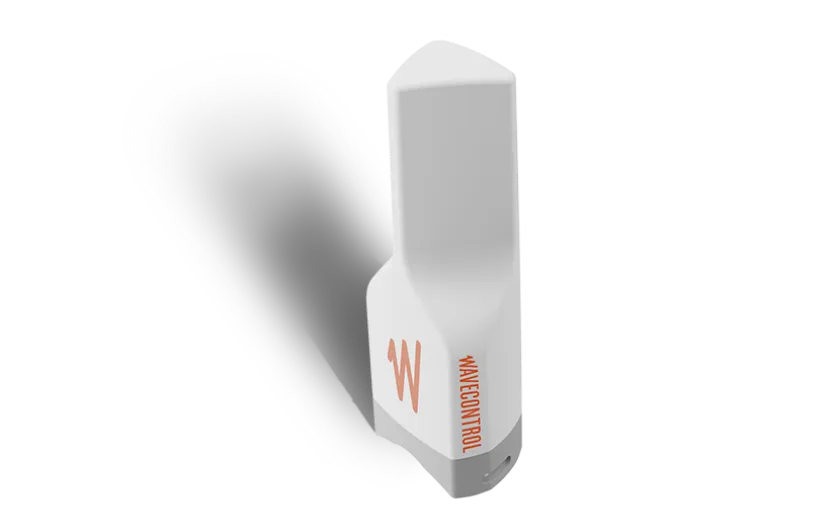
In the Australian context, continuous EMF monitoring involves the permanent installation of automated sensors that measure radiofrequency (RF) levels 24 hours a day. Unlike a standard handheld survey, which provides a “snapshot” of a single moment, these systems record the peaks and troughs of network activity over weeks, months, or years.
This monitoring is primarily conducted to ensure compliance with the ARPANSA RPS S-1 Standard, which is the primary safety framework in Australia. This standard sets rigorous limits for human exposure to RF electromagnetic fields. By using high-precision monitors like the Wavecontrol MonitEM-IoT, operators can validate that even during peak network usage, the levels remain a small fraction of the allowable limit. As a result, the data collected provides a robust legal and technical defense for the network’s operation.
Access more data on the Wavecontrol MonitEM-IoT here.
Public Transparency: The Power of Open Data
One of the most significant shifts in modern utility management is the move toward radical transparency. For years, EMF data was kept in private technical reports, accessible only to engineers and regulators. Today, continuous EMF monitoring solutions allow for the creation of publicly accessible portals. These portals enable the general public to view real-time exposure data from their local area on any web-enabled device.
By making this data public, network operators can:
-
De-escalate Community Tension: Providing an open window into the data removes the “mystery” behind telecommunications infrastructure.
-
Empower Local Governments: Councils can point residents to an official, live data source to answer health and safety inquiries.
-
Demonstrate Long-Term Stability: Users can see that even with increased network traffic, EMF levels remain consistent and safe over months of logging.
This “open-book” approach is a fundamental pillar of the Smart City philosophy, where data is used not just for efficiency, but for community engagement and trust.
Real-World Evidence: Our TMG Head Office Demo
To demonstrate the effectiveness and transparency of these systems, TMG Test Equipment has installed a permanent, live MonitEM-IoT demo unit at our head office in Clayton South, Victoria. This unit serves as a working example of how a continuous monitoring station operates in a suburban industrial environment.
The data from this unit is not hidden behind a firewall. Instead, TMG provides a publicly accessible portal that allows anyone—from community members to infrastructure engineers—to see exactly how the electromagnetic environment fluctuates in real-time. This demo proves the “plug-and-play” capability of the IoT sensors and the clarity of the reporting dashboard.
Access the Live TMG Demo Portal here: https://monitoring.wavecontrol.com/public/demo-tmg
By visiting this link, you can observe the 24-hour sliding averages and see how the system compares the measured levels against international and Australian safety standards.
Procedures for Implementing an EMF Monitoring Network
Deploying an effective continuous EMF monitoring network requires more than just mounting sensors. To get accurate, defensible data, technicians should follow a standardised implementation procedure.
-
Site Assessment: Identify the “point of maximum exposure” based on antenna tilt and direction. This ensures the monitor is capturing the worst-case scenario for the public.
-
Sensor Calibration: Ensure all units have a current NATA-traceable calibration certificate. In Australia, data from uncalibrated sensors is generally not accepted by regulatory bodies.
-
Connectivity Setup: Configure the IoT gateway (such as LTE-M or NB-IoT) to ensure the data is transmitted in real-time to a secure cloud platform.
-
Threshold Programming: Set automated alerts. For instance, if levels reach 50% of the ARPANSA limit, the system should trigger an immediate notification to the site manager.
-
Public Portal Integration: As seen with the TMG demo, configure a public-facing page where stakeholders can view live graphs.
Disclaimer for Procedures: The setup steps described above are provided as general examples of industry practice. Operators must always follow site-specific safety plans, ACMA regulations, and the official Wavecontrol user manual for installation and operation.
Common Mistakes in EMF Data Collection
Even with advanced equipment, certain pitfalls can compromise the integrity of your continuous EMF monitoring program. One frequent mistake is relying on “one-time” testing. Because wireless traffic is lower at 3 AM than at 3 PM, a single daytime test might not capture the true peak, leading to inaccurate safety reports.
Another common error is poor sensor placement. If a monitor is placed too close to a metallic structure, “signal reflection” can cause artificially high readings. Conversely, placing it behind a building can lead to “shadowing,” where the recorded levels are lower than what the public is actually experiencing. In addition, ignoring the “Frequency Selective” nature of modern signals can be a mistake. To properly monitor 5G, the sensor must be capable of measuring the specific millimetre-wave or mid-band frequencies used by the carrier.
Equipment Highlight: The MonitEM-IoT Solution
The Wavecontrol MonitEM-IoT is specifically designed to solve the logistical challenges of large-scale, long-term monitoring. Unlike older, bulky systems, the MonitEM-IoT is compact, low-power, and built for the Australian climate.
-
24/7 Remote Monitoring: Provides a constant stream of data without the need for site visits.
-
Low Operational Overhead: The use of IoT connectivity means the units can run for extended periods with minimal maintenance.
-
Weatherproof Design: IP65-rated and engineered to withstand high Australian UV levels and heavy rain.
-
Scalable Deployment: Because the units are cost-effective, they can be deployed in “sensor swarms” across an entire suburb or campus.
By using this technology, TMG Test Equipment enables operators to move from a reactive “complaint-handling” mode to a proactive “transparency-first” model.
Authority Signals and Australian Relevance
In Australia, the Australian Communications and Media Authority (ACMA) and ARPANSA work together to ensure that telecommunications remain safe. Every operator must comply with the RPS S-1 Standard. Therefore, using NATA-calibrated continuous EMF monitoring tools is the only way to ensure your data is legally robust.
Furthermore, referencing the World Health Organization (WHO) International EMF Project provides a global context for local safety. By aligning Australian field data with international research, TMG helps bridge the gap between technical compliance and community acceptance.
Summary and Conclusion
Continuous EMF monitoring is no longer a luxury for telecommunications providers; it is a foundational part of responsible network management. By providing real-time, transparent data, solutions like the MonitEM-IoT and the Wavecontrol public portal allow for safer, smarter, and more trusted connected environments. As our cities become increasingly data-driven, the ability to demonstrate that our digital infrastructure is safe will be the key to long-term community support.
If you are looking to improve your site’s transparency or need to meet strict ARPANSA compliance requirements, TMG Test Equipment has the local expertise and the demo facilities to assist. Contact us today to discuss a custom monitoring solution for your next project.
Internal Links to Explore
External Resources
Expert Guide Follow-up: Would you like a technical walkthrough of the public portal features, or are you interested in visiting our Clayton South office to see the MonitEM-IoT demo unit in person? Reach out here.