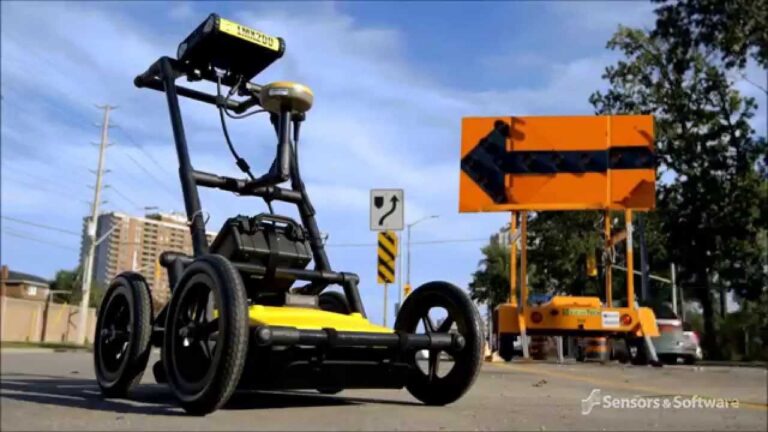
What are the Radiodetection MRX Precision Cable Locators? These advanced tools are professional-grade devices that combine traditional electromagnetic utility tracing with an integrated RF marker ball antenna. Consequently, field technicians can detect buried cables, metallic pipes, and non-metallic assets—like plastic pipes or fibre optics—in a single sweep. This simultaneous detection capability significantly reduces the time spent on-site while improving the accuracy of underground asset mapping. By integrating these two essential functions, the MRX series provides a comprehensive solution for modern utility locating challenges.
Why Efficient Utility Locating Matters in Australia
Underground infrastructure in Australia is becoming increasingly crowded and complex. With the rapid expansion of the NBN, high-voltage power networks, and gas pipelines, the risk of accidental utility strikes has never been higher. According to Before You Dig Australia (BYDA) guidelines, accurate asset identification is the first line of defence in preventing costly damage and ensuring worker safety.
However, traditional locating methods often struggle with non-metallic assets such as PE (polyethylene) water pipes or fibre optic conduits. These materials do not conduct electricity, making them “invisible” to standard electromagnetic locators. To solve this, many Australian utilities now bury RF markers alongside these assets. Using the Radiodetection MRX Precision Cable Locators ensures that these markers are found quickly, preventing delays during excavation.
What are RF Markers and How Do They Work?
RF (Radio Frequency) markers are passive, maintenance-free devices buried near underground assets. They do not require a power source. Instead, they contain a unique frequency that corresponds to a specific utility type, such as water, gas, or telecommunications.
When the Radiodetection MRX Precision Cable Locators emit a signal, the marker reflects it back to the operator. The device then identifies the marker type and depth. These markers come in various formats, including:
-
Marker Balls: Common for general utility marking and identifying joints.
-
Near-Surface Markers: Designed for shallow installations.
-
Mid-Range and Full-Range Markers: Used for deeper infrastructure in large-scale civil projects.
Because these markers are colour-coded and frequency-specific based on international and Australian standards, the operator can confidently identify exactly what is buried beneath them.
Where the MRX Series is Used
The versatility of the Radiodetection MRX Precision Cable Locators makes them essential across various sectors. In Australia, they are frequently deployed in:
-
Telecommunications: Locating high-density fibre optic networks where traditional tracing is impossible.
-
Gas and Water Utilities: Finding plastic pipes and valves that have been tagged with RF markers.
-
Data Centres: Mapping complex underground infrastructure in hyperscale facilities.
-
Civil Construction: Performing pre-excavation sweeps to ensure compliance with AS 5488.1:2019 (Classification of Subsurface Utility Information).
By using the MRX series, contractors can achieve a higher “Quality Level” of data as defined by Australian standards. This level of precision is vital for large-scale infrastructure projects where a single strike could result in millions of dollars in liquidated damages.
Procedures for Locating with the MRX Series
To achieve the best results with Radiodetection MRX Precision Cable Locators, operators should follow a systematic workflow. While specific site requirements may vary, the following general procedure is commonly used:
-
Select the Search Mode: Choose “Simultaneous Mode” to scan for both electromagnetic signals from cables and RF signals from markers at the same time.
-
Conduct a Grid Sweep: Walk a systematic grid pattern over the target area to ensure total coverage.
-
Confirm the Signal: When a marker is detected, the MRX provides a clear audio and visual alert. Use the “Peak” or “Null” modes to pinpoint the exact centre.
-
Measure Depth: Use the integrated depth estimation feature to determine how deep the asset is buried.
-
Log the Data: For G and SG models, save the GNSS coordinates to create a digital map of the site.
Disclaimer for Procedures: The locating steps provided above are examples of general industry practice. Operators must always follow site-specific safety plans and refer to the official Radiodetection user manual for precise calibration and operation instructions.
Common Mistakes in Underground Locating
Even with high-end equipment like Radiodetection MRX Precision Cable Locators, errors can occur if best practices are ignored. One frequent mistake is failing to account for “signal bleed.” This happens when the signal from one utility jumps to another nearby metallic line.
Additionally, many operators forget to check for marker balls altogether. They may assume that if they find a metallic tracer wire, no other markers exist. However, markers are often used to identify specific points of interest, such as bends or “dead ends” in the line.
Finally, ignoring the Current Direction (CD) arrows on the MRX G or SG models can lead to tracing the wrong line in congested areas. Always use the CD feature to confirm you are following the target utility and not a parallel “ghost” signal.
Choosing the Right MRX Model for Your Business
TMG offers three distinct models within the MRX range to suit different professional needs. Each is built on a proven Radiodetection platform.
| Model | Base Platform | Key Advantage | Best For |
| MRX | RD7200 | Rugged and ergonomic | Everyday utility & marker locating |
| MRX G | RD8200G | Integrated GNSS (GPS) | High-accuracy logging and reporting |
| MRX SG | RD8200SG | Survey-grade GNSS | Precision mapping (1–2 cm accuracy) |
The MRX SG is particularly valuable for surveyors who need to integrate their locate data into GIS or BIM workflows. With 1–2 cm accuracy, it eliminates the need for a separate survey team to follow behind the locator. Therefore, the total project cost is reduced while data integrity is maintained.
Authority Signals and Australian Standards
When performing utility locating in Australia, it is critical to reference the AS 5488 standard. This standard provides a framework for the classification of subsurface utility information. Using calibrated Radiodetection MRX Precision Cable Locators ensures that your data meets the highest quality requirements.
Furthermore, following the guidelines set by the Australian Utilities Service Management Association (AUSMA) can help your team maintain best-in-class safety standards. TMG provides local support and training to ensure your team is fully competent in using these advanced systems.
Summary and Conclusion
The Radiodetection MRX Precision Cable Locators represent a significant leap forward in field efficiency. By combining utility detection and RF marker locating into one device, TMG provides contractors with a tool that saves time, reduces risk, and improves mapping accuracy. Whether you are locating fibre optics for the NBN or tracing high-voltage power lines in a congested city, the MRX series offers the precision required for the job.
If you are looking to upgrade your fleet or need advice on which model best suits your requirements, TMG is here to help. Our local expertise ensures you get the right tool for the Australian environment.