
Locating a buried steel pipe or a hidden survey marker is difficult without the right tool. The Schonstedt Maggie Magnetic Locator solves this by detecting disturbances in the Earth’s magnetic field caused by iron and steel. As a result, operators can pinpoint ferrous targets quickly, even when they are deeply buried or completely hidden from view.
This article explains how the Maggie Magnetic Locator works. It also covers where it is used on Australian sites, and how it fits into a locating workflow. Finally, it looks at what to consider when comparing ferrous detection tools.
Why Ferrous Detection Matters
 Undetected buried metal is a common cause of costly project delays and site damage. Striking an unmarked steel pipe can mean reworking a section of the job. Worse, it can damage existing infrastructure. Because of this, reliable ferrous detection is treated as a core safety and planning step rather than an optional check.
However, not every locating job involves an active utility with a signal to trace. Survey pins, valve boxes, property boundary markers, and old cast iron pipework rarely carry a detectable current. This is exactly the gap the Schonstedt Maggie Magnetic Locator is built to fill. It does not rely on a transmitter or an active signal at all.
What Is the Schonstedt Maggie Magnetic Locator?
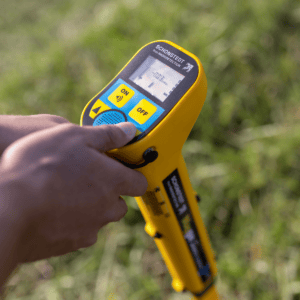
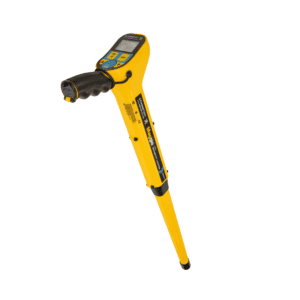
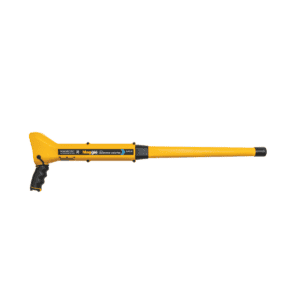
The Maggie Magnetic Locator is a passive magnetic locator built on proven magnetic sensing technology. Rather than transmitting a signal, it senses the small distortions that iron and steel create in the Earth’s magnetic field. Therefore, it can detect ferrous targets that other locating methods miss entirely.
Because it is passive, the Maggie works equally well on live and dead ferrous targets. It does not matter whether a pipe is connected to a network or has been abandoned for decades.
Key features include:
- High-sensitivity magnetic sensing for buried ferrous objects
- Ergonomic, lightweight design for one-handed operation
- Clear audio and visual feedback for fast target confirmation
- Rugged construction built for demanding field conditions
- No transmitter, cables, or ground stakes required
Where the Maggie Magnetic Locator Is Used
The Maggie Magnetic Locator suits any job where ferrous metal needs to be found quickly and confidently. Because it is compact and simple to operate, it fits easily into daily site routines across several industries.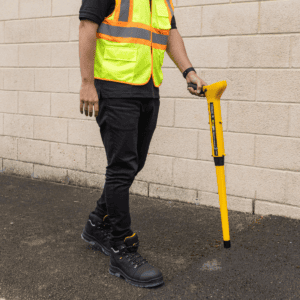
Typical applications include:
- Land surveying, to relocate buried survey pins and boundary markers
- Utility locating, to find steel and cast iron pipes and valve boxes
- Construction, to confirm clearances before excavation begins
- Demolition and remediation, to locate buried debris and old infrastructure
- Government and council works, for asset location and record verification
In addition, many Australian survey and utility locating teams keep a magnetic locator alongside an electromagnetic cable locator. This is because the two tools cover different detection needs. Together, they reduce the risk of a missed target on site.
Using the Maggie Magnetic Locator on Site
The following steps describe a typical locating workflow. This is a general example only, and operators should always follow their employer’s documented procedures and the manufacturer’s instructions.
- First, power on the unit and hold it upright, away from other metal objects.
- Next, sweep the area slowly in overlapping passes, keeping the locator at a consistent height.
- Then, listen for changes in the audio tone and watch the visual indicator for signal strength.
- After that, narrow the search area as the signal increases, moving in smaller increments.
- Finally, mark the confirmed location and record it according to site procedure.
Magnetic interference can come from nearby structures, vehicles, or reinforcing steel. Because of this, operators should always confirm a suspected target before excavating. As a result, cross-checking with site plans or a second detection method is good practice on complex sites.
Common Mistakes When Locating Ferrous Objects
Even experienced operators can develop habits that reduce accuracy. Understanding these helps explain why a purpose-built locator like the Maggie adds real value on site.
- Sweeping too quickly, which can cause a small target to be missed
- Working too close to vehicles, fences, or reinforcing mesh without accounting for interference
- Assuming a signal always indicates the intended target, rather than confirming it
- Skipping a locate entirely because a target is assumed to be non-magnetic
Before any excavation on Australian sites, operators should also check for registered underground assets. Before You Dig Australia offers a free referral service. It identifies registered utility owners in the area. This step does not replace an on-site locate, but it does provide essential context before digging begins.
Equipment and Solutions From TMG
TMG supplies the Schonstedt Maggie Magnetic Locator alongside a broader range of underground locating equipment. This includes electromagnetic cable and pipe locators, plus ground penetrating radar systems.
If your team is building out a locating kit, two guides are worth reading next. Our cable and pipe locator guide and ground penetrating radar guide cover related tools in the same workflow. Together, these resources cover most of a standard underground locating kit.
Teams working near underground assets should also know the relevant safety guidance. Safe Work Australia publishes guidance on managing underground services risk. In addition, Standards Australia maintains AS 5488 for subsurface utility information classification. You can browse our full range on the underground locating equipment page to compare options.
Summary
The Schonstedt Maggie Magnetic Locator offers a simple, reliable way to detect buried ferrous objects. It needs no transmitter and no active signal. Its ergonomic design, clear feedback, and rugged build make it a practical choice for surveying, construction, and utility maintenance work.
Whether your team is relocating survey markers or confirming clearances, the Maggie is worth considering. It is one tool among several. However, its simplicity and reliability make it a trusted option on Australian sites.
Procedures described in this article are general examples only. Always follow your organisation’s documented safety and locating procedures. Consult current Australian standards and manufacturer guidance for site-specific requirements.