In high-risk industries such as oil and gas, mining, and confined space entry, the SST Pumped 4 Gas Detector gives workers accurate, real-time warning of hazardous atmospheres. Atmospheric hazards remain a leading cause of confined space fatalities. Therefore, a detector that actively samples air before entry is essential, not optional. This guide explains how the SST Pumped 4 Gas Detector works, where it fits into Australian safety procedures, and what sets it apart from diffusion-only units.
Why Reliable Gas Detection Matters
Confined space incidents escalate quickly. Oxygen deficiency, carbon monoxide, and hydrogen sulphide can each incapacitate a worker within seconds, often without warning. As a result, pre-entry testing is a legal requirement under most Australian work health and safety frameworks, not simply best practice.
The Safe Work Australia Model Code of Practice: Confined Spaces requires atmospheres to be tested from outside the space before anyone enters. It also requires continuous monitoring while work continues. Because manual sampling is slow and error-prone, a dependable device like the SST Pumped 4 Gas Detector removes much of the guesswork from this process.
What Makes the SST Pumped 4 Gas Detector Different?
Standard gas detectors rely on diffusion, meaning gas has to drift naturally into the sensor. This works fine in open air. However, in tanks, pits, and enclosed vessels, diffusion is often too slow or too unreliable to trust.
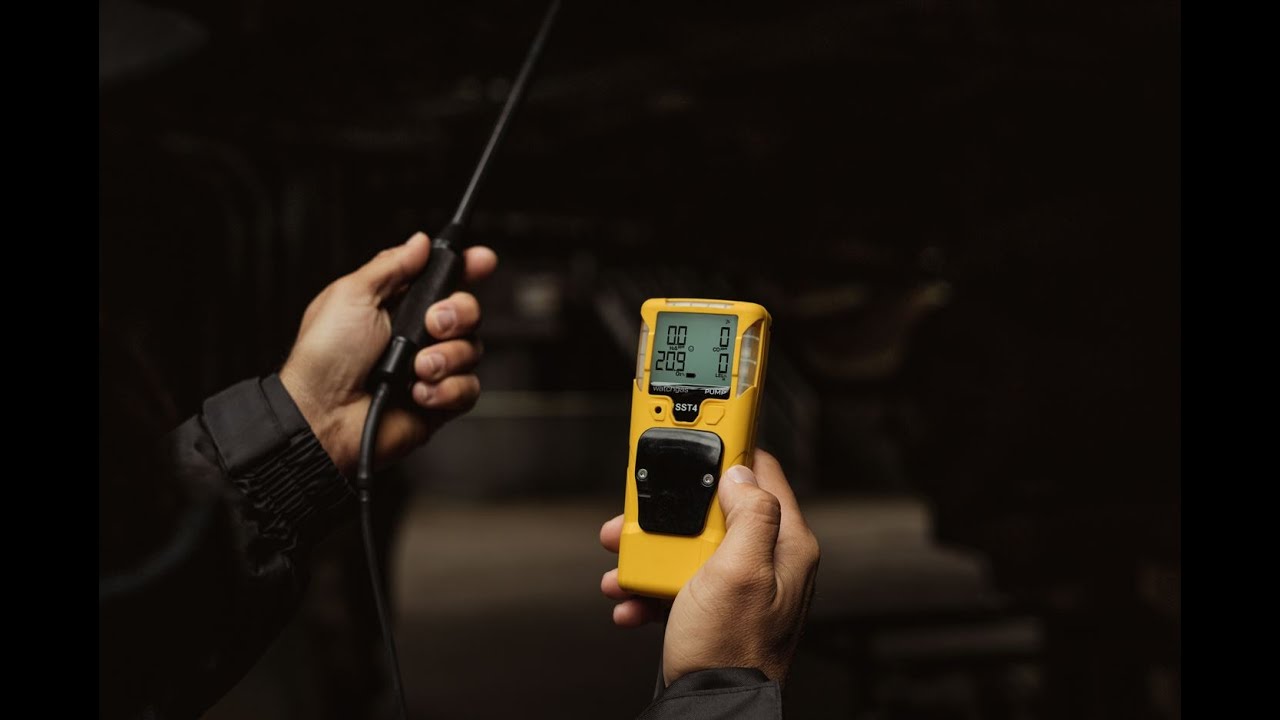
The SST Pumped 4 Gas Detector uses an internal pump to actively draw air samples from up to 33 metres away. As a result, workers can test an atmosphere before ever putting a hand or foot inside it. This pumped configuration is the main reason the unit is specified for tank entry, shipping holds, LPG vessels, and deep excavations, rather than general area monitoring alone.
Where the SST Pumped 4 Gas Detector Is Used
This detector is designed for environments where diffusion-based units fall short. Typical applications include:
- Confined space entry in mining and resources
- Tank, vessel, and pit sampling before entry
- Ship holds and marine confined spaces
- Oil and gas facilities with LPG or hydrocarbon exposure
- Wastewater and utilities work involving pits and manholes
Because these environments span extreme heat, dust, and moisture, the detector’s rugged build matters as much as its sensing accuracy.
Multi-Gas Detection with the SST Pumped 4 Gas Detector
The SST Pumped 4 Gas Detector monitors four gases simultaneously: oxygen (O₂), carbon monoxide (CO), hydrogen sulphide (H₂S), and combustible gases (LEL). This combination covers the most common atmospheric hazards on Australian work sites. As a result, a single device replaces what would otherwise require multiple separate testers.
Carbon monoxide binds to haemoglobin and can cause collapse without obvious warning signs. Hydrogen sulphide is even more dangerous. Its permissible exposure limit is just 10 ppm, and it can deaden a worker’s sense of smell at higher concentrations. Therefore, continuous four-gas monitoring gives supervisors and entrants a genuine safety margin, rather than a false sense of security from single-gas checks.
Smart Features: NFC and Wireless Charging
Beyond sensing performance, the SST Pumped 4 Gas Detector is built around day-to-day usability. Near Field Communication (NFC) allows supervisors to configure devices, pull datalogs, and assign units to workers without opening the housing or plugging in cables. This matters for compliance record-keeping, since exposure data and calibration history often need to be retrieved quickly during an audit.
Wireless induction charging is the other standout feature. Because there’s no charging port, there’s nothing for dust, moisture, or corrosion to damage over time. As a result, maintenance teams see fewer device failures caused by worn connectors, which is a common failure point on older detector models.
Pre-Entry Testing: An Example Procedure
The following is a general example only and should not be treated as a site-specific procedure. Always follow your employer’s documented safe work method statement and the applicable code of practice.
- Confirm the detector has been bump-tested and calibrated within the required interval.
- Test the atmosphere from outside the space using the pump’s extended sampling hose.
- Check oxygen reads between 19.5% and 23.5%, and confirm LEL, CO, and H₂S are within safe limits.
- Continue monitoring throughout entry, not just before it.
- Have an evacuation plan ready if alarms trigger at any point.
Common Mistakes to Avoid
Even reliable equipment can be undermined by poor practice. Common errors include:
- Skipping pre-entry testing because “the space looked fine last time”
- Using an uncalibrated or overdue detector
- Relying on diffusion-only devices for deep or enclosed spaces
- Failing to purge sample lines before drawing a reading
- Not monitoring continuously once work begins
Avoiding these mistakes is often the difference between a routine job and a serious incident.
Rugged Design for Australian Conditions
Australian work sites range from tropical humidity to outback heat. Therefore, equipment needs to handle both extremes without failing. The SST Pumped 4 Gas Detector is rated to an IP65/68 ingress protection standard. It also operates across a wide temperature range of -20°C to +60°C. Its double-shot moulded housing is built to survive drops and rough handling on active sites.
In addition, the clear LCD display and fast sensor response times keep readings easy to read. This holds true even in low light or through safety glasses, which matters when decisions need to be made quickly.
Key Benefits at a Glance
- Advanced multi-gas detection — Monitors oxygen, carbon monoxide, hydrogen sulphide, and combustible gases simultaneously for complete safety coverage.
- Pumped sampling for confined spaces — Actively draws air samples from up to 33 metres, improving accuracy in tanks, pits, and enclosed environments.
- User-friendly and connected — NFC configuration, wireless induction charging, and app integration simplify compliance management.
- Rugged and reliable design — IP65/68 rated, operates from -20°C to +60°C, with fast response times and a clear LCD display.
Summary: Why Choose the SST Pumped 4 Gas Detector
The SST Pumped 4 Gas Detector combines active air sampling, four-gas coverage, and rugged construction in a single unit built for confined space work. Because it addresses the specific limitations of diffusion-only detectors, it’s well suited to tank entry, mining, oil and gas, and marine applications across Australia. For accessories, calibration gas, and induction charging cradles, see TMG’s Watchgas range, gas detector accessories, and calibration gas categories. Alternatively, browse the full gas detection range.
Disclaimer: The pre-entry testing procedure above is provided as a general example only. It is not a substitute for a documented safe work method statement or the specific requirements of AS 2865 and your jurisdiction’s WHS regulator.