Technicians inspecting fibre optic connectors need a fast way to confirm an end face is clean. The VIAVI FiberChek Probe is a handheld fibre inspection microscope built for this exact task. It captures, analyses, and grades connector end faces automatically, without a laptop or separate camera.
Because of this, it has become a common choice on Australian telecommunications and data centre sites, where it turns a manual, subjective check into a repeatable pass/fail result. This article explains how the VIAVI FiberChek Probe works. It also covers where the tool fits into a fibre inspection workflow, and what to consider when choosing an inspection tool for your team.
Why Fibre Inspection Matters
Dirty or damaged connectors are one of the leading causes of fibre network faults. A single contaminated end face can cause signal loss, back-reflection, or intermittent faults across an entire link. As a result, inspecting every connector before it is mated has become standard practice rather than an optional step.
This is why “Inspect Before You Connect” (IBYC) is recognised across the industry as the baseline workflow for fibre technicians. However, IBYC is only effective if inspection is quick enough that technicians actually do it under time pressure. This is one reason automated tools such as the VIAVI FiberChek Probe have gained traction on Australian job sites.
What Is the VIAVI FiberChek Probe?
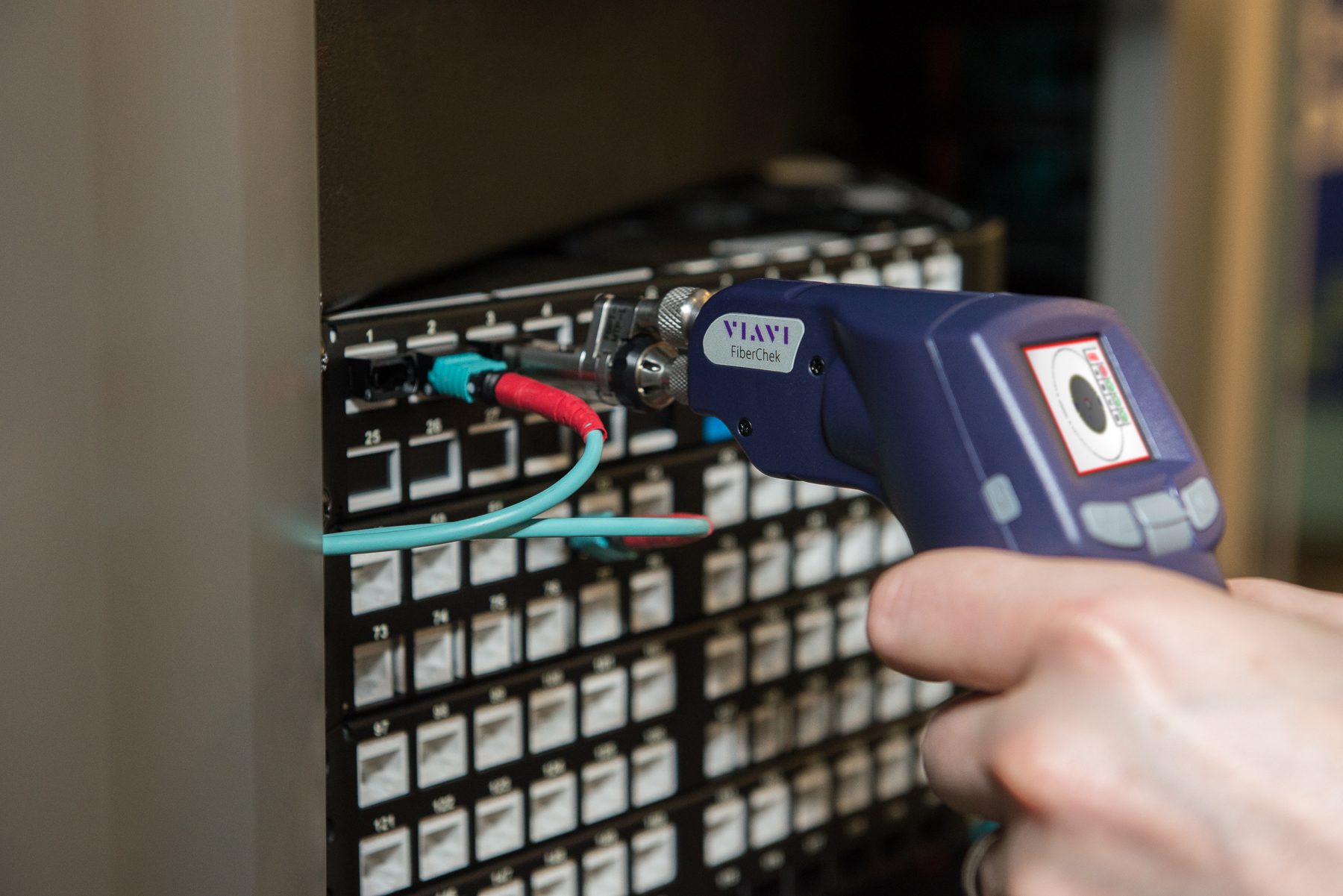
The VIAVI FiberChek Probe is a handheld, all-in-one fibre microscope. It combines a touchscreen display, auto-focus, auto-centring, and automated pass/f
ail grading in a single device. As a result, it does not need a connected laptop or a separate camera to produce a result.
The probe connects via USB, Wi-Fi, or Bluetooth. It can also store, name, grade, and recall test results directly on the unit. Because of this, technicians can inspect connectors on towers, in dense patch panels, or inside equipment enclosures without carrying extra gear.
Key features include:
- Built-in image capture and automated pass/fail grading
- Auto-focus and auto-centre for consistent results
- Wireless connectivity via Wi-Fi, USB, and Bluetooth
- Compatibility with standard FBP-series inspection tips
- Support for both patch cord and bulkhead connectors
Where the FiberChek Probe Is Used
The VIAVI FiberChek Probe is compact and self-contained, so it suits a range of Australian fibre environments, including locations that are difficult to reach with bulkier test equipment.
Typical applications include:
- Passive Optical Network (PON) build, turn-up, and maintenance
- Fibre-to-the-Antenna (FTTA) and tower-top connector checks
- Data centre and telecommunications exchange installations
- Long-haul and submarine cable network testing
- Circuit board and card-level connector verification
However, the probe is also used on smaller commercial and residential fibre rollouts. Because the same tool covers both large and small jobs, some contractors standardise on one device. This means fewer microscopes to carry, charge, and calibrate across a team.
Inspecting Fibre Connectors With the VIAVI FiberChek Probe
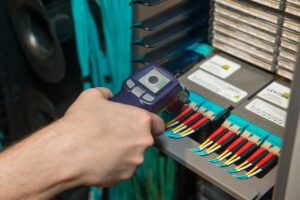
The following steps describe a typical inspection workflow. This is a general example only; technicians should always follow their employer’s documented procedures and the manufacturer’s instructions.
- Power on the FiberChek Probe and connect it via USB or Wi-Fi if needed.
- Insert the patch cord ferrule or bulkhead inspection tip into the probe.
- Press the trigger to auto-focus on the fibre end face.
- Review the automated pass/fail result against the configured grading criteria.
- If the connector fails, clean it and re-inspect before connecting.
Because both sides of a mated pair should pass inspection independently, checking each connector separately reduces the risk of contaminating an otherwise clean end face.
Common Fibre Inspection Mistakes
Even experienced technicians can develop habits that undermine fibre network reliability. Understanding these helps explain why automated tools add measurable value.
- Skipping inspection under time pressure, which is a common cause of preventable faults
- Relying on visual judgement alone, since manual grading is subjective and varies between technicians
- Reusing a dirty inspection tip, which transfers contamination to otherwise clean connectors
- Failing to inspect both sides of a mated pair, so a clean patch cord can still fail if the bulkhead is dirty
The VIAVI FiberChek Probe grades end faces against IEC 61300-3-35 criteria. This is the international standard that defines pass/fail requirements for connector end face quality, and it removes much of the subjectivity described above. For the full standard, see the International Electrotechnical Commission.
VIAVI FiberChek Probe vs Manual Inspection Microscopes
Compared with older manual microscopes or basic USB inspection cameras, the VIAVI FiberChek Probe has a few practical differences worth noting. It does not require a connected laptop to operate, so it is easier to use in the field. Its automated grading also removes a step of human judgement from the pass/fail decision.
In addition, its wireless connectivity allows results to sync with other VIAVI instruments and mobile devices for reporting. This can be useful for contractors who need documented inspection records for large NBN, telecommunications, or enterprise fibre projects.
Registered cabling providers working under Australian telecommunications rules may also find that documented inspection results help during audits. The Australian Communications and Media Authority sets out registration requirements for cabling work. Communications Alliance publishes related industry guidelines.
Fibre Testing Equipment From TMG
TMG stocks the VIAVI FiberChek Probe alongside a broader range of fibre testing equipment, including inspection tips, cleaning kits, and OTDR test sets. If your team is building out a fibre testing kit, our OTDR testing guide and fibre cleaning best practice guide cover related steps in the same workflow. Therefore, these three resources together cover most of a standard fibre inspection and testing kit.
You can browse the full range on our fibre testing equipment page to compare options for your team.
Summary
The VIAVI FiberChek Probe combines automation, portability, and standardised grading in a single handheld device. It reduces inspection time, removes some of the subjectivity from manual checks, and supports Inspect Before You Connect practice on site.
Whether a team is building PON networks, servicing data centres, or maintaining tower-top connectors, the FiberChek Probe is worth considering. It is one option among several, but its combination of automation and portability suits most fibre inspection kits.
Procedures described in this article are general examples only. Always follow your organisation’s documented safety and testing procedures, and consult current Australian standards and manufacturer guidance for site-specific requirements.