
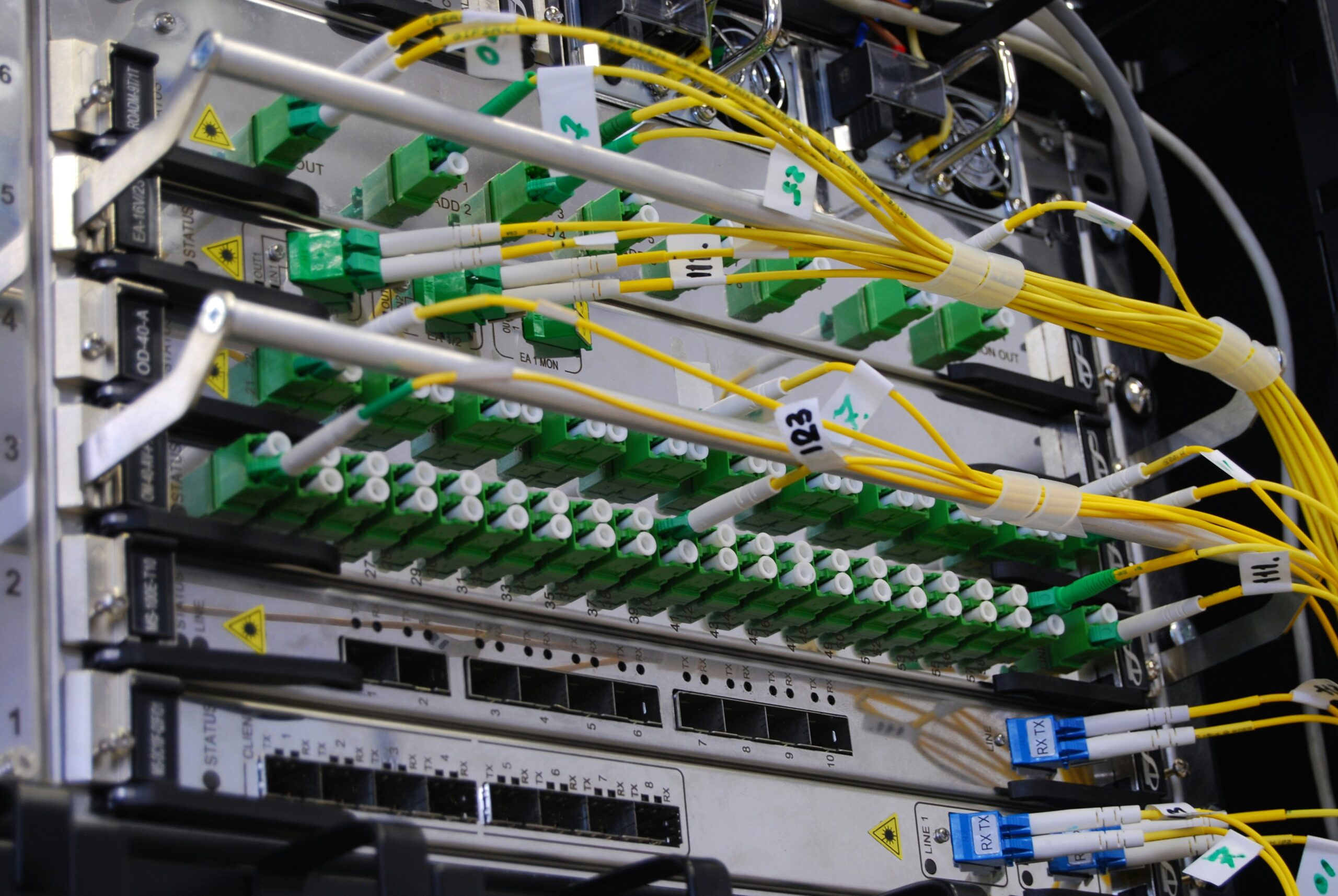
Telecommunications technicians use specialised instruments for fibre, wireless and cable work, and some of those instruments are needed only for particular projects. Test equipment hire, also called rental, gives a business the right instrument for the length of a job without the cost of owning it through the months between jobs.
This post covers what ownership involves, where hiring helps most and when buying is still the better choice. It also explains how TMG’s rental service works.
What owning test equipment involves
The purchase price is the first cost of an instrument, and several more follow. Ownership also brings:
- Regular calibration and servicing
- Storage and asset tracking
- Idle time between projects
An OTDR, a PIM analyser or a fusion splicer earns its keep on the days it is in use. On every other day it still needs calibrating to schedule, storing safely and keeping track of, and those costs stay with the owner whether or not a project is running.
Keep capital available for other priorities
Money spent on equipment is unavailable for anything else. A business that uses test equipment hire can put that capital towards staffing, expansion or an unexpected cost, and pay for equipment only on the days a project needs it.
Hire charges can also be allocated to the job that needed the equipment, which keeps project costs visible when you quote the next one.
Match equipment to project demand
Telecommunications workloads rise and fall with project cycles and market conditions. When work slows, an owned instrument sits on a shelf and earns nothing. A hired instrument goes back at the end of the job, and the cost stops with it.
For a business with uneven demand, test equipment hire lets equipment spending follow the work.
Lower the barrier for new and growing businesses
A technician starting a company often needs several instruments before the first invoice is paid. Hiring lets that business accept projects without buying every instrument first, and it allows the business to try a new area of work, such as fibre splicing or PIM testing, without a long-term commitment to the equipment.
As demand grows, the business can take on larger or more varied projects and buy only the instruments it uses most.

Try equipment before you buy
Instruments differ in handling, software and the workflows they suit. Hiring one for a live job shows how it performs in your conditions before you commit to a purchase.
Several of TMG’s hire kits come from brands it also supplies, including the Radiodetection RD8200G TX10B kit, the VIAVI FiberChek Probe kit and the Wavecontrol SMP3 Dual kit. A business can hire one of these on a project and then decide whether to buy it.
Calibrated equipment for compliance work
Network owners and infrastructure providers set strict testing standards, and instruments must be calibrated to meet them. When you hire, the instrument’s owner manages its calibration schedule instead of you.
TMG states that its fibre hire fleet is maintained and calibrated to meet optical loss budgets and performance standards. When you book, ask for the calibration status and any certificate for the specific unit, and keep it with your test records.
In Australia, NATA accredits calibration laboratories against ISO/IEC 17025, and a NATA-endorsed certificate provides evidence of measurement traceability.
Technical support alongside the equipment
A hired instrument is only useful if the operator can set it up correctly. When a setting is unclear or a reading looks unexpected, a product specialist can help.
TMG has supplied test and measurement equipment to Australian industry since 1980, and its product specialists can be reached on 1800 680 680.
When owning still makes sense
Owning remains a sound choice for a business with steady, long-term demand for an instrument. A simple calculation shows where the line sits. Add the purchase price to the calibration and servicing costs you expect over the years you will keep the instrument, then divide the total by the daily hire rate. The result is the number of hire days that costs the same as owning.
If your expected use is well above that number, buying is likely to cost less. If it is well below, test equipment hire is likely to cost less.
Test equipment hire from TMG
TMG runs an online rental catalogue with live inventory for test equipment hire. Choose your dates, select the equipment and book. The catalogue has six categories: Enterprise, Cable Location, ESD Testing & Compliance, Fibre, Wireless and Data Testing.
Examples from two of those categories:
- Fibre: VIAVI MTS-4000v2 OTDR kits, the VIAVI FiberChek Probe and Sumitomo Type-72M12 PLUS splicer kits
- Wireless: Kaelus PIM analysers, the VIAVI 3Z RF Vision Site Aligner and the Wavecontrol SMP3 Dual kit
Contractors can also read our test equipment rental contractor guide for site procedures and common hire mistakes.
TMG lists free shipping from $50 on its rental site. To confirm availability of a specific kit, call 1800 680 680 and choose option 4. TMG lists its hours as Monday to Friday, 9:00 am to 4:00 pm.