
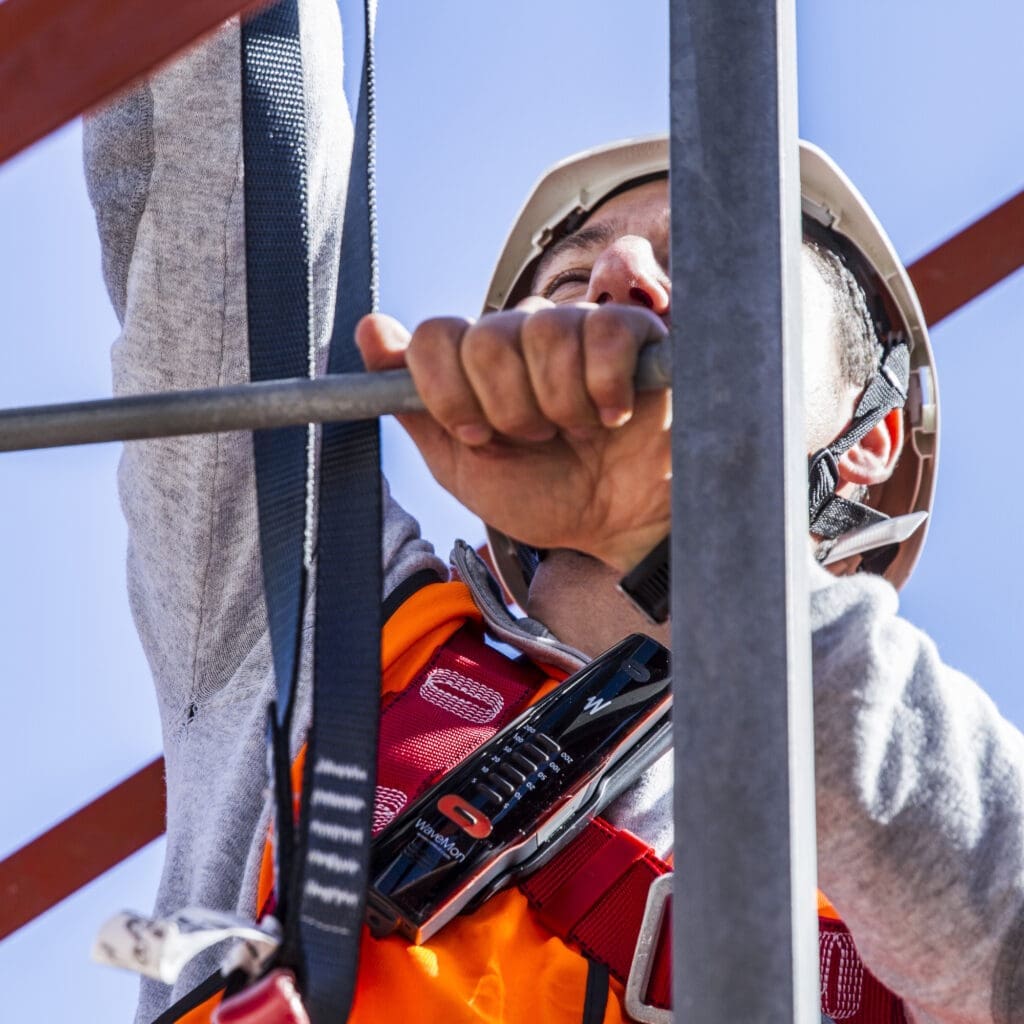
 If you work near telecommunications infrastructure in Australia, ARPANSA RF exposure monitoring is not a box-ticking exercise — it is a fundamental part of working safely. Technicians, contractors, and adjacent trades operating near active antennas encounter real radiofrequency (RF) energy every day. However, the value of your monitoring programme depends entirely on how accurately your device measures and communicates that exposure. Choose the wrong tool, and you risk either missing genuine hazards or grinding work to a halt with unnecessary alarms.
What Is ARPANSA RF Exposure Monitoring?
RF exposure monitoring is the process of measuring electromagnetic field (EMF) levels in environments where wireless infrastructure is active.
In Australia, the benchmark for safe RF exposure is defined by the Australian Radiation Protection and Nuclear Safety Agency (ARPANSA). In 2021, ARPANSA introduced the Radiation Protection Series (RPS) S-1 standard, which sets specific occupational and public exposure limits for RF EMF from 100 kHz to 300 GHz. These are not general international guidelines — they are the nationally adopted limits that apply to Australian workers and worksites.
RF monitors are commonly deployed in the following situations:
- On telecommunications towers and rooftop antenna sites
- During installation, maintenance, or inspection work near active antennas
- By contractors operating in proximity to shared or co-located infrastructure
- In adjacent industries including electrical, solar, and construction trades
It is important to understand that some level of RF exposure is expected in these environments. Therefore, ARPANSA RF exposure monitoring is not about eliminating all exposure. It is about confirming that exposure remains within the limits defined by the RPS S-1 standard — and that workers receive clear, reliable information when it does not.
Why Australian Standard Alignment Matters
Not all RF monitors are calibrated to the same benchmark. Many devices on the market reference international frameworks such as ICNIRP (International Commission on Non-Ionizing Radiation Protection), FCC (USA), or EU Directive 2013/35/EU. While these are credible references, they are not the same as ARPANSA.
There is a meaningful distinction between the two:
- Guidelines offer general recommendations applicable across multiple countries and contexts
- Standards define the specific limits adopted within a jurisdiction — in this case, Australia
For workers and contractors operating under Australian WHS obligations, a monitor aligned to ARPANSA RPS S-1 ensures that the readings you see in the field reflect the actual regulatory expectations in your working environment. This matters for compliance documentation, safety audits, and incident reporting. In addition, ARPANSA alignment is increasingly expected by principal contractors and site managers across the telecommunications and infrastructure sectors.
The Real-World Impact of ARPANSA RF Exposure Monitoring Accuracy
Accuracy in RF monitoring goes beyond measurement precision. It directly determines how you — and your team — respond on site. Because of this, a poorly calibrated or inappropriately configured device can create significant problems.
When Monitors Overestimate Exposure
A device that consistently overstates field levels will trigger alarms even when conditions remain well within safe limits. Over time, this leads to:
- Alarm fatigue — workers stop taking alerts seriously because they fire too frequently
- Unnecessary work stoppages — productivity suffers without a genuine safety reason
- Loss of device trust — technicians lose confidence in the monitor, and therefore in the broader monitoring programme
- Increased stress — routine, compliant exposure begins to feel threatening
When Monitors Underestimate Exposure
However, the risk runs equally in the other direction. A device that underreports field levels may fail to alert workers as exposure approaches or exceeds the ARPANSA limit. This is the more serious outcome — and it is precisely why choosing a device calibrated specifically to RPS S-1 is so important.
What Good ARPANSA RF Exposure Monitoring Looks Like
A well-calibrated, standard-aligned personal RF monitor provides:
- Accurate, realistic representation of actual field conditions
- Alarms that trigger only when exposure approaches meaningful ARPANSA thresholds
- Consistent readings across the full frequency range relevant to your site
- Clear, actionable feedback that supports informed decisions in real time
Technicians often work under time pressure in complex, high-access environments. Therefore, the device must be trustworthy. Confidence in your equipment translates directly to confidence in your safety posture — and your compliance position.
Common Mistakes When Selecting an RF Monitor in Australia
Many procurement teams and workers make the following errors when choosing RF monitoring equipment:
1. Assuming international standards are equivalent to ARPANSA Devices calibrated to ICNIRP or FCC limits are not equivalent to ARPANSA RPS S-1. Always confirm Australian standard alignment before purchase or rental.
2. Ignoring alarm threshold configuration A monitor with poorly configured alarm points will either over-alert in normal conditions or fail to protect when it matters. Alarm behaviour must reflect your specific site and the applicable ARPANSA limits.
3. Underestimating frequency range requirements Modern Australian telecommunications infrastructure — including 4G and 5G networks — operates across a broad spectrum. Your monitor must perform accurately from the lower RF bands through to millimetre-wave frequencies.
4. Choosing price over reliability In safety-critical applications, a cheaper unit that generates unreliable readings provides no real protection. As a result, the cost of a compliant, purpose-built monitor is almost always justified against the risks of non-compliance or missed exposure events.
Note: The guidance above is provided as general information only. Site-specific RF monitoring procedures should always be developed and reviewed by a qualified RF safety specialist in accordance with your organisation’s safety management system.
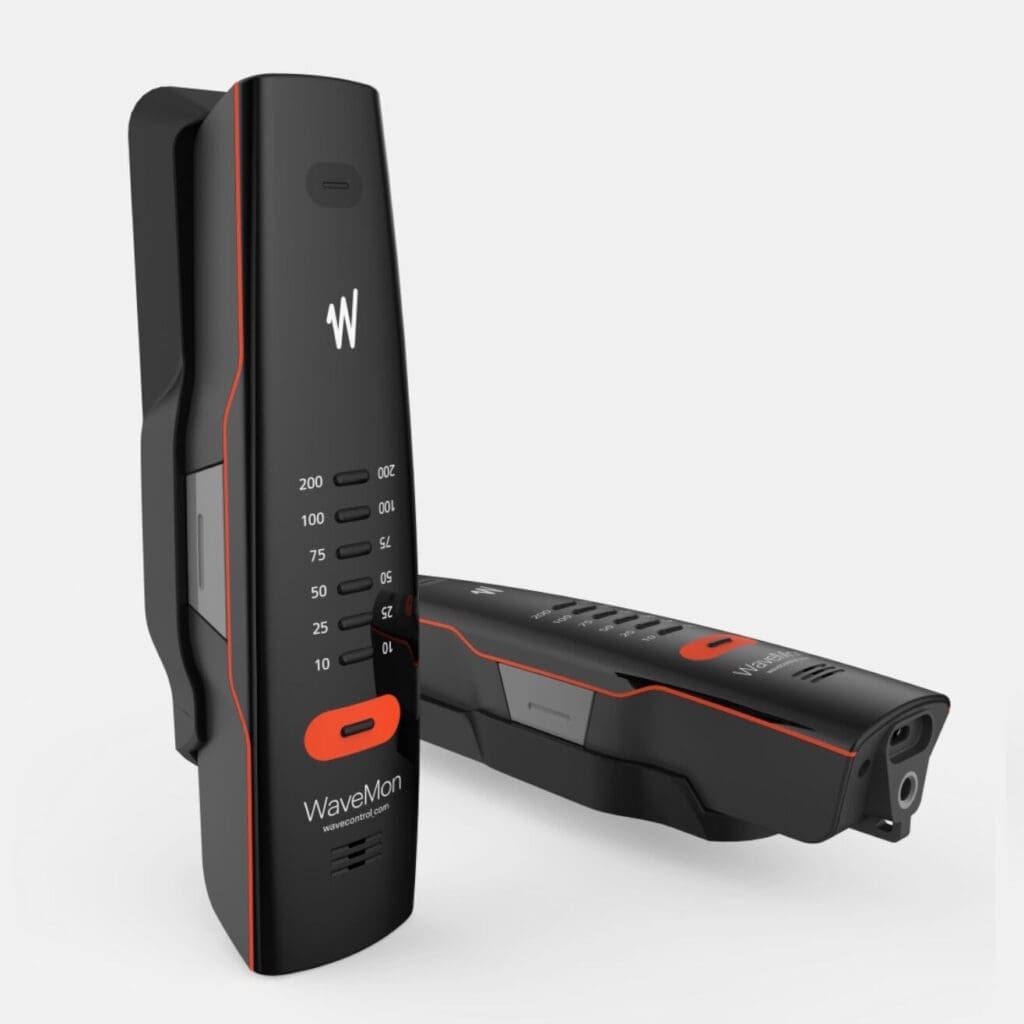 The WaveMon RF-60 ARPANSA: Built for the Australian Environment
The Wavecontrol WaveMon RF-60 ARPANSA, available through TMG Test Equipment, is the only personal RF monitor purpose-built to meet the ARPANSA RPS S-1 (2021) standard. It is designed specifically for the conditions Australian telecom workers face on site.
Key features include:
- Full ARPANSA RPS S-1 alignment — calibrated to Australian occupational and public exposure limits
- Extensive frequency coverage — 100 kHz to 60 GHz, covering the full range of current Australian telecommunications infrastructure
- GPS logging — records location alongside exposure data for compliance documentation and reporting
- Multi-standard compliance — also meets ICNIRP, FCC, EU Directive 2013/35/EU, SC6 (Canada), and NATO limits, making it suitable for international project work
- Alarm behaviour calibrated to meaningful thresholds — not routine field conditions
For contractors who are not telecommunications specialists — such as electrical or solar workers operating near rooftop antenna sites — the WaveMon RF-60 ARPANSA removes a significant layer of uncertainty. You receive clear, standard-aligned information without needing to interpret raw data or cross-reference exposure tables on site.
TMG also offers NATA-accredited calibration services to ensure your RF monitoring equipment maintains its accuracy over time — a requirement for defensible compliance data under Australian regulatory frameworks.
Summary: ARPANSA RF Exposure Monitoring Done Right
ARPANSA RF exposure monitoring is an essential control measure for anyone working near active telecommunications infrastructure in Australia. The accuracy of your device, its alignment with the RPS S-1 standard, and the appropriateness of its alarm thresholds are not secondary considerations. They determine whether your monitoring programme actually protects your people — and stands up to scrutiny.
Therefore, selecting a monitor purpose-built for the Australian regulatory environment is one of the most practical decisions a safety manager or contractor can make. It gives workers clear, meaningful information. It supports compliance. And it allows work to proceed with the confidence that the readings on screen are genuinely trustworthy.
For further reference, the ARPANSA RPS S-1 standard provides the definitive Australian baseline for RF EMF exposure limits. You can also explore TMG’s broader range of RF and telecom test equipment for additional solutions across sales, rental, repair, and calibration.